RESTORATIVE DENTISTRY IN TACOMA & LAKEWOOD
Porcelain Onlays
More than a filling. Less than a crown.
Sometimes a tooth lands right in the middle: too damaged for a filling, but healthy enough that covering the whole thing with a crown isn’t necessary.
That’s where a porcelain onlay comes in.
An onlay rebuilds only the damaged portion of your tooth, helping restore its strength while allowing us to keep more of the healthy tooth you already have. Plancich Dental offers porcelain restorations at both our Tacoma and Lakewood offices.
What are dental inlays?
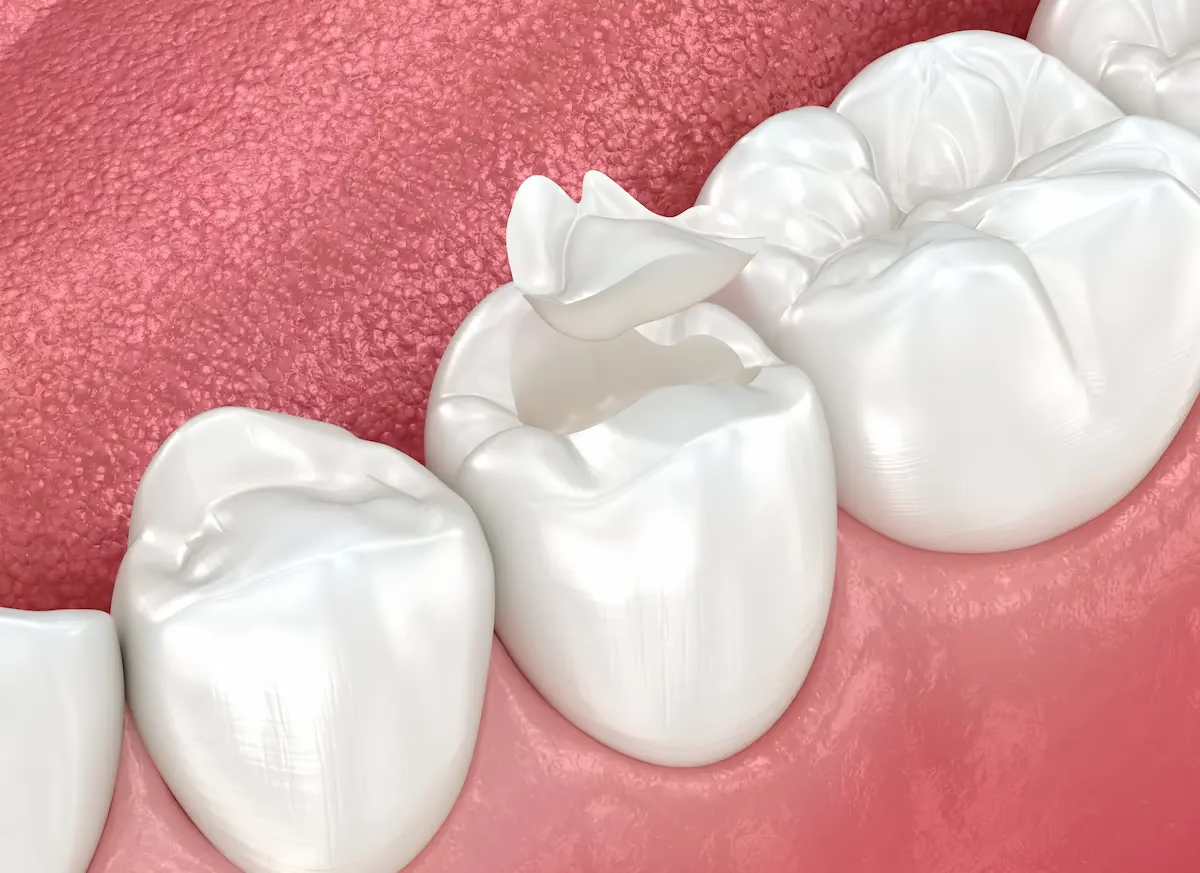
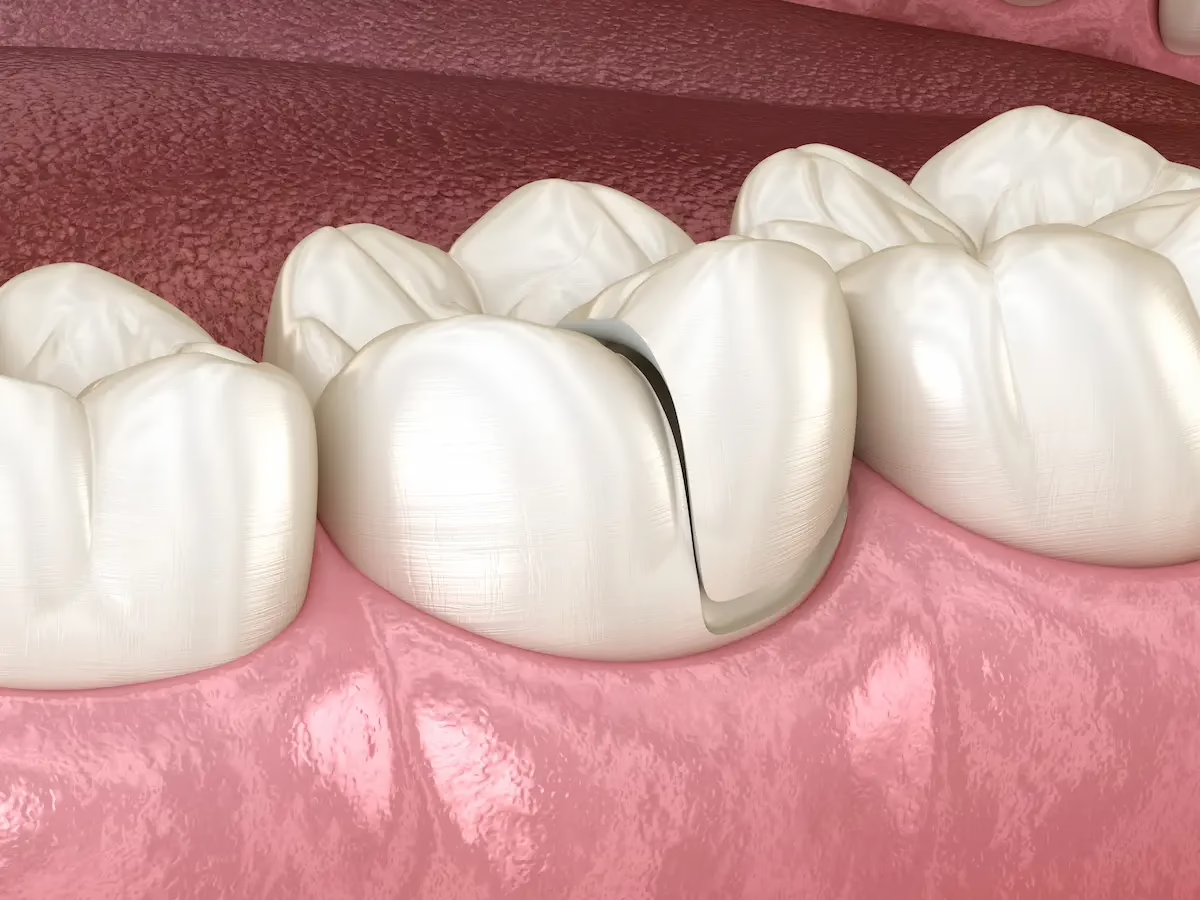
Dental inlays are similar to onlays, in that they are used for larger cavities that are too big for a filling. But they are smaller, and are placed between the cusps of teeth, instead of over them.
Porcelain inlays are popular because they can be nearly invisible, but inlays can also be made of composite material.
How do inlays and onlays work?
We offer the inlay and onlay procedure right here in our dental practice. Inlays and onlays are created in a laboratory, so the procedure can take two appointments.
During the first appointment, we will use a local anesthetic to make sure you are comfortable. We start by removing the portion of the tooth that is damaged, leaving as much of the natural tooth as possible. We take an impression of your tooth and send it to the lab so they can create your permanent onlay or inlay. In the meantime, we apply a temporary onlay or inlay to protect your tooth.
At your second appointment, we will remove the temporary onlay or inlay and apply the permanent one. We check the biting surface and fit to make sure that your new dental restoration will be comfortable and functional. Then, we permanently attach it with a resin material, and polish it smooth.
After your procedure, you will want to practice good oral health care to make sure your restoration lasts.

Who are dental onlays and inlays for?
Dental onlays and inlays are a good treatment option for patients who have a damaged tooth that cannot be fixed with a filling, especially if cusps of the tooth are damaged or missing. Larger cavities or more extensive tooth decay can be addressed with inlays and onlays, as long as enough of the natural tooth is still healthy enough to support it. If not, you might need a crown, partial crown or a cap.
How to start?
If you have a damaged tooth,we can help you decide what the best treatment options are for you. Whether it’s a dental filling, a crown, onlay or inlay, you can rest easy knowing that your dental care is in good hands at Plancich Dental. Call us today to make an appointment!

Your natural tooth gets first dibs
Our first question isn’t “What’s the biggest restoration we can put here?” It’s “How much healthy tooth can we keep?”
If an onlay can give your tooth the strength it needs while preserving more of what’s already healthy, we’ll tell you.